
$39 Trillion in Debt and Dollar Stablecoins: The Extension of U.S. Dollar Hegemony Through Digital Implantation
The U.S. national debt has surpassed $39 trillion. Facing a reality where China, its largest trade surplus partner, is reducing its purchases of U.S. Treasury bonds, the U.S. has chosen private dollar stablecoins, such as Tether, as a new channel for absorbing short-term Treasury debt. Attempting to apply moral standards and expressing frustration over the selfish behavior of a superpower manipulating global capital market rules to defend its own debt crisis will only lead to exhaustion. In the face of the logic of an uncontrollable, massive hegemony, remaining emotionless and coldly observing the trajectory of capital movement is the most logical and pragmatic survival strategy.
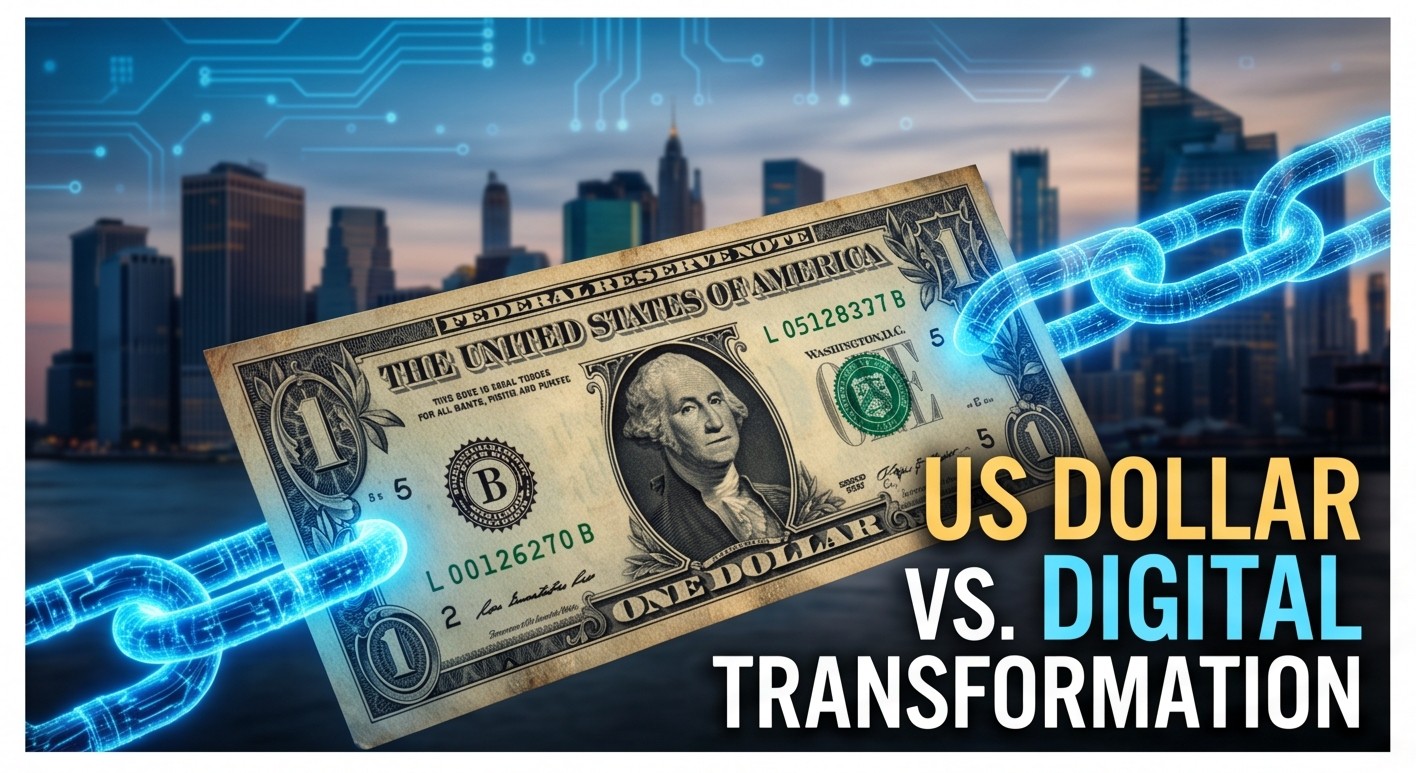
Concurrent with this capital absorption is the total subjugation of physical financial networks. The control structure of Operation Stone Ghost, which previously monitored global data by preempting undersea fiber-optic cables, is being transplanted directly into the digital asset market. U.S. companies like Chainalysis track blockchain data in real-time to identify and instantly freeze funds related to Iranian oil payments and hostile nations. Even the virtual asset ecosystem, which touted decentralization, is being completely absorbed under the thorough infrastructure control of U.S. judicial jurisdiction and investigative agencies, thereby seamlessly extending the control of existing dollar hegemony.
China is pursuing a pragmatic dual strategy: it has effectively outlawed virtual assets to prevent domestic capital flight, while simultaneously integrating into the dollar stablecoin ecosystem through its offshore hub, Hong Kong. Meanwhile, central bank digital currencies (CBDCs) promoted by various governments have the primary objectives of applying negative interest rates and conducting overt financial surveillance. However, controlled currencies that impose usage expiration dates cannot inherently compete with private dollar stablecoins that flow without borders. Unless a state secures a monopoly through physical force, the leadership of new currency will migrate to private digital infrastructure that offers maximized efficiency.
The integration of digital assets and artificial intelligence is completely dismantling the outdated structures of the traditional financial industry. The X402 protocol, led by Coinbase, enables machines to perform micro-payments using stablecoins without the need for human identity verification or traditional bank accounts. Elon Musk's attempt through X to offer interest rates that far exceed those of traditional banks follows the same trajectory. Just as major record labels once clung to defensive battles by resisting the tide of streaming, incumbent financial institutions are rejecting crypto, but the expansion of a new network system where technology and capital are fused cannot be halted.
At the center of this massive hegemonic shift, Samsung Electronics of South Korea possesses the potential to become the most formidable digital financial hub. If a dollar stablecoin is directly embedded into Galaxy smartphones, the devices themselves would function as massive mobile capital nodes and channels for holding U.S. Treasury debt. However, South Korea's opaque regulations and bureaucratic control practices are fundamentally blocking the gateway for private innovation. The fact that an archaic administrative system is stripping domestic firms of the opportunity to secure a global lead does not mean that the fusion of technology will stop. The absolute shift in hegemony, where capital and data are fused, is already an inevitable reality.
So What for ME
[Principle 1: Adopting a Cold-Blooded Mindset]
It is profoundly foolish to attempt to build a dam when a massive tsunami is approaching.
Dollar hegemony is not collapsing; it is merely shifting its form to digital, expanding even more robustly.
I will not be swayed by short-term currency fluctuations, and I will convert a significant portion of my cash flow into the new digital assets that the U.S. has decided to adopt and control.
[Principle 2: Comprehensive Restructuring of Asset Portfolio]
The era of saving only in Korean Won solely through labor income has ended.
In the era of the X402 protocol, where machines perform micro-payments with stablecoins, traditional bank accounts are losing their utility.
I will firmly abandon any attachment to traditional Korean stocks or real estate, which have lost their innovation due to regulatory barriers.
Instead, I will completely overhaul my portfolio to focus on U.S. Web3 infrastructure companies—the black holes of capital—and the core nodes of the global cryptocurrency ecosystem.
[Principle 3: Immediate Action Plan]
I will master the operation of cold wallets (personal wallets) to avoid the risks associated with centralized exchanges.
As soon as my monthly salary is deposited, I will unconditionally convert a fixed percentage into digital dollar assets.
To prevent information asymmetry, I will rely solely on global primary data, rather than Korean media, as my investment indicator.
Merely understanding the shift in digital hegemony intellectually is useless for survival.
I will transmit even a small amount, such as 100,000 KRW, directly in an on-chain environment to practically embody the nature of borderless blockchain.
I will quietly and astutely reap the magic of compounding interest and the trickle-down effects from the new systems that giants are paving over.
Today's Reflection
Record your daily action inspired by today's article.
The Ludens Times Digest
Get our latest inspirations delivered straight to your inbox.