
"I bequeathed 10 million won to my grandson, and it became 21.7 billion won" The real magic of compound interest
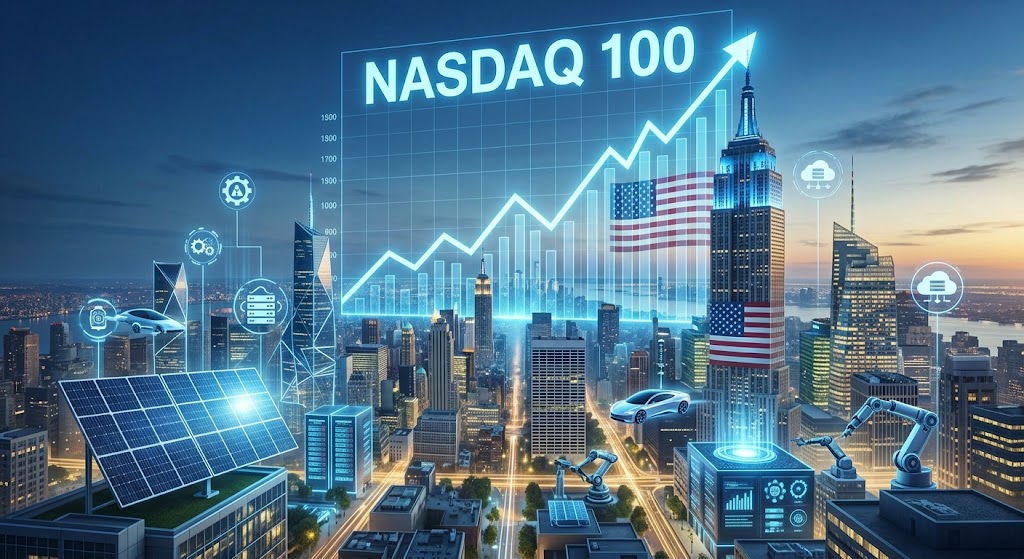
Individual Stock Investment vs ETF Diversified Investment
The Fatal Weakness of Individual Stock Investment (Volatility)
If you had bought Nvidia or Bitcoin 10 years ago and held on until now, you would have made hundreds of times the profit, but in reality, the general public can absolutely not hold on.
This is because stock prices do not rise in a straight line, and the draw down from the peak (MDD) is beyond imagination. In fact, over 10 years, Nvidia experienced a total of four major crashes:
Two periods of plunging over 30%
One plunging 50%
One plunging 60%
For example, when 100 million won becomes 20 billion won, if it drops just 30%, 6 billion won evaporates overnight. The general public tears their hair out every day, tormenting themselves, and the media logically explains "the reason why this stock is finished," maximizing psychological fear, so in the end, they cut their losses at the bottom. To make hundreds of times the profit with individual stocks, you are likely to get sick from stress and become a 'patient' before becoming rich.
The Reason Why ETFs (Exchange Traded Funds) Are Good
ETFs put several blue-chip companies in one basket and automatically adjust the ratio (rebalancing).
They may rise less than individual stocks, but the risk of a major crash is low and your mind is at peace. Because of the belief that "if this index collapses, the United States collapses," you do not get anxious even if the stock price drops, holding on until the end and enjoying the compound interest effect.
Why Nasdaq 100 instead of S&P 500? (Data Proof)
Warren Buffett's Principles and the Changed World
Many blindly believe in great asset manager Warren Buffett's 'manufacturing-centered value investment,' but the world has already changed into a digital/tech era. Warren Buffett showed the best performance for 35 years before 2000, but in the digital era after 2000, his results were not better than the market average.
Comparison of Actual Yields over 30 Years
Average annual yield over the past 10 years: Nasdaq 100 is 17.4% while Warren Buffett was at 11.7%. The difference of 5.7% per annum creates an enormous gap in asset size as it accumulates over 10, 20 years.
The S&P 500 index is also excellent and stable, but it has a high proportion of manufacturing. On the other hand, Nasdaq 100 is filled only with tech (technology) companies that newly create wealth for humanity, showing overwhelming yields during long-term investment. The data is proving the superiority of Nasdaq.
Old-fashioned Illusion that Stock Beginners Should Discard
Do Not Look at Stock Price Evaluation (Balancing/Valuation)
Stock beginners often worry, "Isn't the current stock price too expensive (PER, PBR, etc.)?" However, this kind of value analysis is a relic of the 'Industrialization (Manufacturing) Era' 150 years ago that used to fluctuate according to the business cycle.
Current innovative growth stocks like Google, Apple, Nvidia have never been 'cheap' from the perspective of value stocks. If you obsess over old-fashioned standards, you can never catch the leading stock of the era. Since it is impossible to time when to buy, the right answer is to just believe in the world's trend and invest 'right now'.
Essence of Investment Seen through Human History
Having gone through the Agricultural Revolution and the Industrial Revolution, it is currently the Digital and AI Era. Every time new technology appears, the ruling class that monopolizes wealth changes.
It is close to impossible for the general public to figure out in advance which technology company will be the final winner. The simplest and most certain way is to fully get on a mainstream like Nasdaq 100 that follows that technology index.
The Magic of Compound Interest that Bequeaths 21.7 Billion Won to a Grandson
Result of 55 Years of Long-term Investment
Let's assume you bury 10 million won in Nasdaq 100 ETF when a child is born, and leave it alone as if it's non-existent money until the child is 55, the retirement age.
If you conservatively set the average annual yield of Nasdaq 100 at 15%, after 55 years, the assets multiply by about 2,170 times. In other words, 10 million won becomes 21.7 billion won.
Even if you set the future inflation rate extremely high and the currency value is slashed to one-tenth, a large sum of 2.1 billion won in real value is guaranteed. If funds are insufficient, if you put in 20 million won, the tax-free limit, a retirement fund exceeding 4 billion won is prepared.
Customized Investment Product Guide for the General Public
Recommendation based on Volatility (Risk) Tendency
Big Tech / Semiconductor ETF (High Risk High Return): Suitable when you can mentally endure large fluctuations and want hot profits. However, since a specific theme (semiconductors, etc.) has a risk of being replaced by another technology in the far future, intermediate rebalancing is necessary.
Nasdaq 100 ETF (Medium Risk High Return): The most recommended main (pillar) asset for the general public. As the era changes, it automatically takes out old technology companies and fills in new innovative companies, so rebalancing is not needed for a lifetime.
TDF (Low Risk Stable Type): A fund that automatically adjusts the ratio of stocks and bonds according to the investor's retirement point (e.g., TDF 2050, TDF 2060). It is the best alternative if your personality is such that you choke up over stock price fluctuations and cannot sleep.
What the General Public Should Absolutely Not Do: Leverage / Inverse
Products that leverage yields by several times (leverage) or bet on falling stock prices (inverse) are professional territory. Long-term, money melts away even if you get the timing only slightly wrong. Since the core of "investment where anyone can become rich" is not going fast but going certainly without dying, beginners should not even look at it.
Perfect Life Success Formula for the General Public
Leave Investment to Experts and Concentrate on Your Main Job
Worldly success is grabbing both 'wealth and fame'. The general public, for whom investment is not their main job, does not need to waste energy at all chasing stock market information every day and checking quarterly performance. Such information is only waste data whose value disappears after time.
Investment ends if you understand only the 'knowledge and principle' of burying money in the world's main stream (US tech market). Leave daily emotional labor and asset management to cheap ETF or fund systems.
And concentrate on your main job during the remaining valuable time to achieve success (fame). Achieving fame in your main job, and when wealth increases on its own from buried assets, that is the way to make your life happiest, most joyful, and successful.
Original Source
If you have cash, buy Nasdaq 100 like this, "It rises by 2170 times"
So What for ME
1. Abandon individual stocks and focus entirely on the 'Nasdaq 100 ETF.'
As an ordinary investor, I can never maintain my sanity through the 30% to 60% market crashes that individual assets like Nvidia or Bitcoin inevitably experience.
Instead, I will make the 'Nasdaq 100 ETF' the cornerstone of my wealth—a system that automatically filters out stagnant companies and replaces them with new, innovative ones in sync with global trends.
Rather than clinging to past paradigms centered around manufacturing (such as the S&P 500 or traditional value investing), I trust the historical data proving that investing in tech giants—the true creators of human wealth—will yield unparalleled, dominant returns over the next decade.
2. Stop trying to time the market or obsess over valuations.
Agonizing over whether the market is "too expensive right now" based on metrics like PER and PBR is nothing more than a relic of the industrial era.
Innovative growth stocks like Google and Apple have never once been considered "cheap" by traditional value standards.
Since it is virtually impossible for a novice like me to catch the exact bottom, I will stop making meaningless market predictions and start buying consistently 'right now,' with unwavering faith in the direction of human progress.
3. Completely block out leverage and inverse products.
Driven by the greed to get rich quick, I will never even look at products that multiply returns through leverage or bet on market declines through inverses.
The absolute most important rule in investing is not how fast you go, but ensuring that you survive and get there safely.
I refuse to introduce catastrophic risks to the assets I plan to accumulate steadily over the next 10 years.
4. Entrust the system with the investing and focus 100% on my 'main profession' and 'daily life.'
Short-term quarterly earnings reports and macroeconomic headlines are merely noise—information that will become completely worthless over time. I refuse to waste my precious time and emotional energy on them.
I completely delegate my asset management to a low-cost, automated ETF compounding system.
By turning off my stock apps and channeling all remaining energy into my career, I can build prestige in my profession while letting the system quietly multiply my wealth. This is the most perfect equation for success that an ordinary citizen like me can put into practice.
Support the independent voice of Ludens Times
Today's Reflection
Record your daily action inspired by today's article.
The Ludens Times Digest
Get our latest inspirations delivered straight to your inbox.